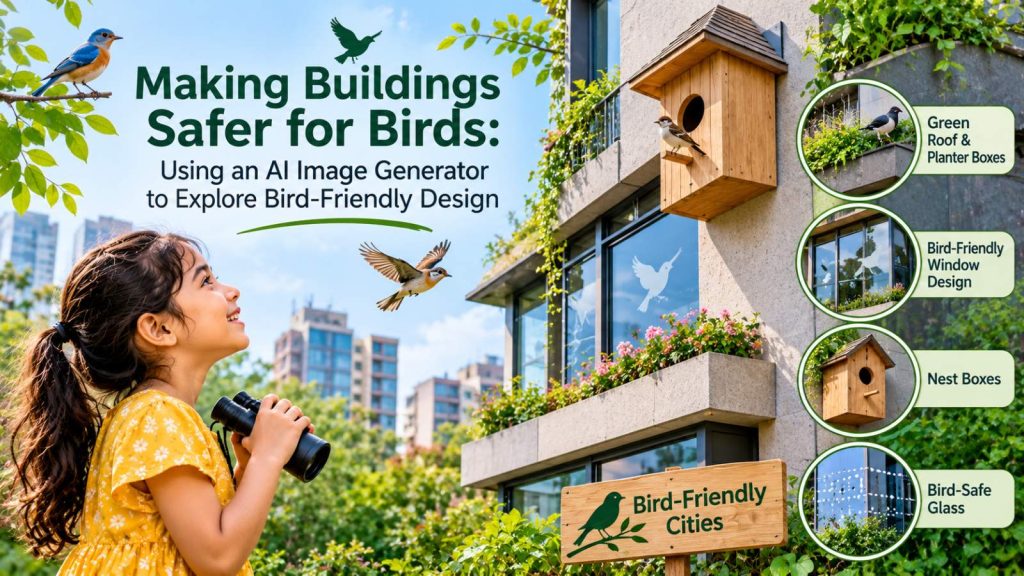
Glass buildings bring natural light into homes, offices, and public spaces, but reflective windows can create serious hazards for birds. To a bird, a pane of glass may look like an open sky, a tree, or a clear passage through which it can fly. Collisions can happen in both urban and residential areas, making thoughtful building design an important part of protecting local wildlife. An ai image generator can help people explore ways to make buildings more bird-friendly before changes are made. By turning design ideas into visual concepts, it can help architects, property owners, educators, and community groups compare window treatments, building features, and surrounding landscapes. The images are useful for exploring possibilities, although practical decisions should always be based on established wildlife guidance.
Understand the Problem Through Visual Examples
Bird collisions are not always easy to understand from written explanations. A window may appear harmless to a person standing inside a room, yet reflect nearby trees or the open sky from a bird's point of view. Transparent glass can also create the illusion of a clear flight path through a building.
Visual examples can make these risks easier to recognize. A concept image might show a glass office façade reflecting a row of trees, followed by an alternative featuring visible exterior patterns that make the glass more noticeable to birds. These comparisons can support awareness campaigns and early design conversations. They help viewers understand that the goal is not necessarily to remove windows, but to make glass surfaces less likely to be mistaken for open space.
Explore Patterns That Make Glass More Visible
One approach to reducing collisions is to use visible patterns on glass. Depending on the product and its tested specifications, these may include dots, lines, or other repeated markings positioned across a window surface. Their placement, spacing, and visibility matter; a decorative pattern that looks attractive in an image is not automatically effective in real conditions. An AI image generator can help explore how different patterns might look on various building styles. For example, a designer could compare subtle vertical lines on a modern office façade with a more noticeable dotted treatment on a residential window.
Dreamina can support this early creative process by helping users turn descriptions of bird-friendly glass treatments into visual references. The resulting concepts can make it easier to discuss appearance, visual impact, and possible design directions before researching suitable real-world products.
Rethink the Landscape Around Windows
The area immediately surrounding a building can influence how birds interact with its windows. Trees, shrubs, and other greenery may create reflections that make glass surfaces confusing. Landscaping choices should therefore be considered alongside window design rather than treated as a completely separate decision. Visual concepts can show how planting arrangements might work around different building types. A proposed office courtyard, for instance, could be illustrated with greenery positioned away from large reflective surfaces. Another concept might show a residential building with a carefully planned planting area and clearly visible window treatments.
These images can help landscape designers and property owners discuss the relationship between plants, natural light, and glass. They should not be treated as proof that a particular planting arrangement will prevent collisions, since local bird species and site conditions also matter.
Consider Building Features From a Bird's Perspective
Bird-friendly design involves more than applying patterns to existing windows. Designers may also consider building corners, glass walkways, covered entrances, balconies, and connecting structures. Transparent barriers around balconies or walkways, for example, can create additional collision risks when they are difficult for birds to see. An image-based exploration can help identify areas worth reviewing. Ask for a visual concept of a building entrance with glass partitions, then compare it with an alternative that uses visible markings or less reflective materials.
This perspective is particularly useful during early planning. It encourages teams to examine how birds might approach the building rather than judging every feature only from the viewpoint of someone using the space.
Give Older Buildings a Practical Starting Point
New construction offers opportunities to consider bird safety from the beginning, but existing buildings also deserve attention. Schools, apartment blocks, offices, and community facilities may already have large areas of untreated glass. Visual concepts can help property managers compare possible improvement ideas without immediately committing to a renovation. Options might include professionally selected window treatments, exterior screens, or changes to particularly hazardous glass areas.
A useful comparison should reflect the actual building as closely as possible. Include its general shape, window arrangement, and surrounding features in the description. The images can then support conversations about which areas need closer inspection and what types of approved solutions may be suitable.
Turn Design Ideas Into Community Awareness
Bird-friendly buildings are not solely an architectural concern. Residents, students, maintenance teams, and local organizations can all contribute by recognizing collision risks and supporting informed improvements. Generated visuals can make educational material more engaging. A school presentation might use contrasting building concepts to explain why reflective glass can be confusing to birds. A community group could use illustrations to introduce window safety during a local environmental event.
When sharing these images, explain which features are conceptual and which recommendations come from reliable wildlife guidance. This distinction helps prevent attractive illustrations from being mistaken for tested solutions.
Keep Design Inspiration Separate From Technical Approval
Generated images have limitations. They may show markings with unrealistic spacing, overlook specific building conditions, or suggest materials that are not appropriate for the intended purpose. They cannot determine whether a particular treatment meets recognized bird-safety standards.
Before choosing a product or changing a building, consult credible bird-conservation organizations, relevant building guidance, and qualified professionals. Consider the local species, window orientation, reflection levels, building use, maintenance needs, and product performance. The most useful role of visual generation is to support exploration and communication. It can help people ask better questions, compare broad ideas, and identify features that deserve professional assessment.
Conclusion
Making buildings safer for birds starts with recognizing that glass can appear very different to wildlife than it does to people. An AI image generator can help communicate this challenge by showing alternative window treatments, building features, and surrounding landscapes. These visual concepts can encourage better conversations during design, renovation, and community education. They are not substitutes for tested products or expert advice, but they can help make bird-friendly design easier to understand and consider.
Frequently Asked Questions
Why do birds sometimes fly into windows?
Birds may mistake reflections of trees or sky for real surroundings. Transparent glass can also appear to offer a flight path through a building, leading to collisions.
Can generated images show effective bird-safe window patterns?
They can illustrate possible patterns, but they cannot confirm effectiveness. Pattern spacing, placement, materials, and product performance should be checked against reliable bird-safety guidance.
Are bird-friendly building ideas relevant to homes as well as offices?
Yes. Residential windows, balcony barriers, glass doors, and large windows near gardens can all create potential risks. Suitable improvements depend on the building and its surroundings.
Can AI-generated visuals help with environmental education?
Yes. They can make unfamiliar design problems easier to explain through comparisons and examples. Any educational material should distinguish conceptual illustrations from verified recommendations.
Should an existing building replace all its glass to become bird-friendly?
Not necessarily. Depending on the location and the nature of the risk, targeted treatments or other improvements may be appropriate. A qualified professional or bird-conservation organization can help identify suitable measures.