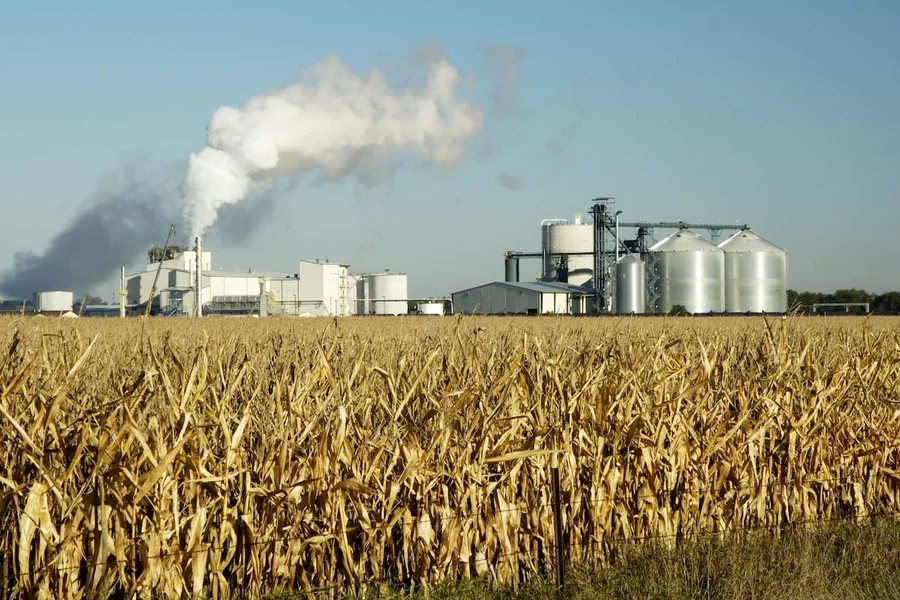
An ethanol producer in Iowa sits down with a credit buyer in January 2026. Deal is for 45z tax credit volume across 2026, 2027, and 2028. Three years, same facility, same feedstock, same corn-ethanol conversion process. The buyer runs the math and asks the question that lands this entire conversation.
What is the CI score going to be in 2027? Nobody knows. Not Treasury. Not DOE. Not Argonne.
That is the thing that makes 45z different from every other transferable credit. A 48E solar credit is locked at 30% once a project is placed in service. A 45X battery cell credit is $35 per kWh and stays $35 per kWh. The 45z tax credit recalculates every year, because Treasury publishes a new emissions rate table and DOE updates the 45ZCF-GREET model on its own schedule. The same gallon of fuel can earn different credit amounts in different production years.
How the 45z Tax Credit Formula Converts a Carbon Intensity Score Into Cents Per Gallon
The math is simple. Emissions factor equals (50 minus the fuel’s CI score) divided by 50. Multiply that factor by the base credit rate per gallon. Base rate is $1.00 per gallon for non-aviation transportation fuel when prevailing wage and apprenticeship rules are met. Without PWA, the rate drops to 20 cents.
Corn ethanol at CI 55 earns zero. At CI 40, (50-40)/50 = 0.2, or 20 cents per gallon at full PWA. The same facility pulling CI down to 25 earns 50 cents per gallon. A 15-point CI swing doubles or triples the per-gallon credit. Which is why producers obsess over feedstock sourcing and CSA (climate-smart agriculture) practices that drop the number.
The Annual Emissions Rate Table and the GREET Model Updates That Reset the Math Each Year
Treasury publishes a new emissions rate table every year. 2026’s table came out in Notice 2026-53 on September 8, 2026. DOE updates the 45ZCF-GREET model separately. DOE updated the model on June 12, 2026, and again in September 2026.
The rule from the proposed regulations. Emissions rate for the fuel is determined by the GREET model and the emissions-rate table in effect when the fuel was produced. Not when the deal was signed. Not when it was sold. When it was produced.
A facility that scored CI 40 in 2026 might score 38 in 2027 because the model refined ag-chemical coefficients. Or might score 42 because DOE revised another model coefficient The producer did nothing differently. The 45z tax credit value moved.
Why Buyers Pricing a Three-Year Forward Credit Face a Different Risk Than ITC Buyers
A buyer committing to a 2026-2028 strip prices against an unknown emissions rate for 2027 and 2028. ITC buyers do not face this. Their credit amount is fixed by the project’s placed-in-service calculation and does not float.
So 45z deals carry a different risk-allocation structure. Buyers either price only the volume at the current year’s known rate and refuse to commit forward, price forward volumes at a steeper discount reflecting model-reset risk, or require seller indemnities tied to a floor CI score or GREET model-change event.
Pricing on 45z currently runs wider than ITC pricing. Per-year uncertainty is one driver. The other is duration: the credit expires December 31, 2029, so a 2028 commitment is a late-cycle commitment.
What OBBBA Changed About Feedstock Sourcing That Also Rewrites Multi-Year Pricing
OBBBA made six changes to the 45z tax credit, three of which hit multi-year pricing directly. Extension through 2029 added two credit years and widened the forward curve. Removal of the higher SAF rate (capped at $1.00 per gallon for fuel produced after December 31, 2025) collapsed the premium SAF producers were pricing into 2027-2029 strips. Feedstock limited to US, Canada, and Mexico killed a chunk of global supply chains producers had planned around.
Net effect for a buyer: better duration certainty, worse per-gallon upside on SAF, and every feedstock contract in the producer’s supply chain needs re-papering.
The Risk-Allocation Clauses That Transfer Agreements Now Carry to Price Annual Reset
Three clauses are standard in 45z tax credit transfer agreements now. GREET model change-of-law. If DOE updates the model between contract signing and production, the parties agree in advance whether buyer bears, seller bears, or they split the delta.
Minimum CI floor. The seller warrants the fuel will achieve at least X CI score. If below, deal volumes rebalance or the price adjusts.
Tax law change-of-law. If Congress amends 45z, as it has twice in three years, either side can walk or renegotiate.
None of these show up in a standard 48E transfer because the 48E does not float. 45Z deals are structurally different, and the paperwork has caught up.
Conclusion
The 45z tax credit was designed to reward lower-carbon fuel. The downside is a moving-target credit amount. Treasury’s annual emissions rate table, DOE’s periodic GREET updates, and OBBBA’s intermittent amendments all reset the math on what buyers are trying to price as a bankable asset. Deals get done anyway, with wider discounts and tighter indemnity packages. For a producer going to market, understanding how buyers price annual-reset risk matters as much as the CI score itself.