Getting dressed for school during cooler months can involve a little more thought than simply reaching for the thickest coat. Children need clothing that feels comfortable during the journey, works with their everyday outfits, and does not become awkward once they are inside a heated classroom. For parents, the challenge is finding a balance between suitable coverage and a manageable fit.
A jacket that looks good with a school outfit is useful, but its shape and overall construction matter too. Too many bulky layers can make sleeves feel restrictive and make it harder for children to move naturally. A more considered combination of everyday clothing and a suitable outer layer can help keep the outfit practical throughout the school day.
A classic varsity jacket can be one option for families exploring casual school styles. Its familiar silhouette can work with different everyday combinations, while the choice of what to wear underneath allows parents to adjust an outfit according to the weather. The aim is to choose pieces that children can wear comfortably rather than adding unnecessary layers.
Start With the School Outfit, Not Just the Weather
A useful way to choose a jacket is to look at the clothing a child already wears to school. Some schools have uniforms with particular colours, while others allow more freedom with everyday outfits. In either situation, the outer layer should complement the clothing underneath rather than make the complete outfit feel crowded. Neutral colours and familiar shapes can be easier to coordinate with several combinations.
Parents should also consider how the jacket sits over a school shirt, jumper, or cardigan. A garment that fits comfortably over a single top may feel different when worn with another layer. Checking the complete outfit helps reveal whether the sleeves, shoulders, and body have enough room. This is more useful than judging the jacket on its own, especially when children will wear it repeatedly during the week.
Why Extra Thickness Is Not Always the Answer
When temperatures begin to fall, adding another thick garment may seem like the simplest solution. However, children do not remain outdoors throughout the day. They may walk to school, sit in a warm classroom, take part in indoor activities, and go outside again during breaks. An outfit designed only for the coldest part of the morning may feel uncomfortable after the child has spent time indoors.
A better approach is to consider how each layer contributes to the complete outfit. A comfortable base top can be combined with a suitable middle layer when needed, while an outer jacket provides another option for the journey. If the indoor environment becomes warm, the child can remove the outer garment. This keeps the clothing adaptable without relying on several heavy pieces at once.
Pay Attention to Shape, Sleeves, and Everyday Movement
The way a jacket fits can have a noticeable effect on how practical it feels. Children regularly reach for school bags, write at desks, play with friends, and take part in activities that involve bending and stretching. If the shoulders are restrictive or the sleeves feel uncomfortable, the jacket may become distracting even when its appearance is appealing. A comfortable fit should allow ordinary movement without requiring constant adjustment.
Parents can check the fit by asking children to move their arms forward, raise them, and sit down while wearing the jacket. These simple actions can show whether the garment feels too tight or whether its length interferes with movement. It is also useful to consider what will be worn underneath. The best fit leaves enough room for the intended outfit without making the jacket look or feel excessively oversized.
A PatPat Pink Varsity Style for Comfortable School Days
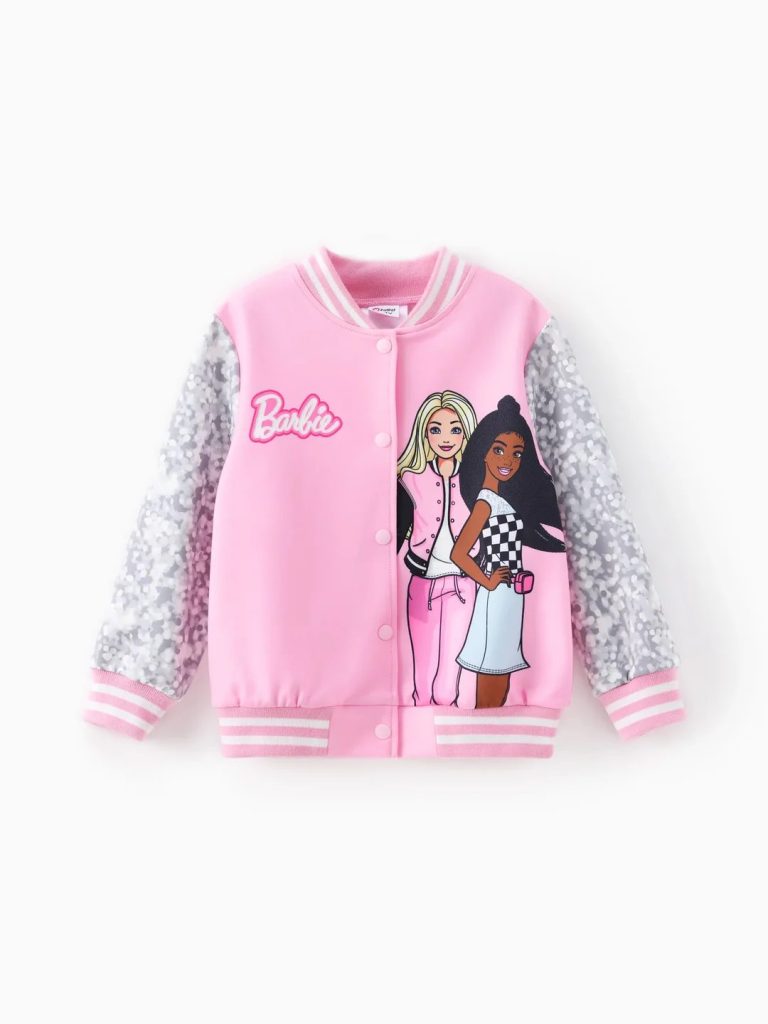
One PatPat product image shows a pink button-front varsity-style jacket with contrasting patterned sleeves, striped ribbed detailing at the neckline, cuffs, and hem, and a coordinated pink body. These visible details give the garment a recognisable varsity-inspired appearance that can work with simple school-day outfits. Because the image does not confirm fabric composition, warmth rating, or care instructions, parents should check the individual product listing before purchasing or washing the garment.
Match Colours Without Making the Outfit Complicated
School clothing often includes a limited colour palette, which can make choosing an outer layer easier. A jacket in a coordinating shade can sit comfortably alongside uniform trousers, skirts, shirts, or everyday tops. Parents do not necessarily need to match every colour exactly. Instead, they can look for combinations that feel balanced and allow the jacket to work with more than one outfit during the week.
For children who wear brighter colours or patterned clothing, a simpler jacket may help keep the overall appearance balanced. The reverse can also work: a distinctive outer layer can add interest to a basic combination of trousers and a plain top. Looking at the wardrobe as a whole helps parents avoid buying a jacket that only works with one particular outfit. Versatility is especially valuable when storage space and clothing budgets are limited.
Choose a Lighter Layer for Changing Indoor and Outdoor Conditions
The school day often involves several changes in temperature, even when the weather forecast remains fairly consistent. A child may feel comfortable while walking outside but become warm after entering a classroom or activity room. For this reason, it helps to choose clothing that can be adjusted without requiring a complete outfit change. A removable jacket is one practical part of that approach.
Parents exploring a fleece lined girls jacket can compare available styles with the child’s routine and the expected weather. The collection includes different types of girls’ outerwear, so individual product descriptions should be checked before making assumptions about lining, fabric, or warmth. A lighter option may suit some everyday situations, while colder conditions may call for a different combination. The right choice depends on the garment’s verified construction and how it will be worn.

Make Getting Ready Easier for Children
A school jacket should fit into the morning routine without creating unnecessary delays. Children may need to put it on quickly before leaving home, remove it when they reach the classroom, and wear it again when heading outside. A design that the child can manage comfortably can make these transitions simpler. Parents should check the actual fastening method and consider whether their child can operate it independently.
It is also helpful to give children a consistent place to keep their outerwear during lessons. A coat hook, locker, or designated space can prevent jackets from being left on chairs or misplaced during busy school days. Younger children may need reminders, while older ones can gradually take responsibility for looking after their belongings. These small habits can make everyday clothing choices more manageable for the family.
Consider Fabric and Care Before Making a Purchase
The appearance of a jacket does not reveal everything about how it should be maintained. Different fabrics can have different washing and drying requirements, and decorative details may need particular attention. Before purchasing, parents should read the individual product description and care instructions rather than assuming that all jackets can be washed in the same way. This is especially important for garments with contrasting panels, prints, or additional detailing.
Care information can also help families decide whether a jacket suits their weekly routine. A child who wears the same outer layer frequently may need a garment that fits comfortably into the household’s usual laundry habits. Parents should follow the manufacturer’s stated instructions for washing, drying, and storage. If a product page does not provide a particular detail, it is better to check with the retailer than guess based on the appearance of the material.
Think About How Often the Jacket Will Be Worn
A useful school jacket is usually one that fits into several parts of a child’s routine. It may be worn on the journey to school, during family outings, or for casual activities at the weekend. Choosing a style that works with different trousers, tops, and shoes can make it easier to reach for regularly. This is often more practical than buying a garment that looks suitable but has limited use.
Parents can also consider the local climate and the length of the cooler season. In areas where mornings are chilly but afternoons become mild, a lighter combination may be more useful than a very heavy coat. In colder regions, a varsity-style jacket may be better suited to milder days or used as one part of a layered outfit. The decision should reflect real conditions rather than relying on a general idea of what a particular jacket style can provide.
A Comfortable School Look Comes From Balance
Choosing school outerwear does not have to mean sacrificing comfort for appearance or adding unnecessary thickness for the sake of warmth. A well-considered outfit takes account of the child’s daily schedule, the clothes already in the wardrobe, and the changes between outdoor and indoor environments. When the base outfit and outer layer work together, children can move through the day without feeling weighed down by their clothing.
Parents can make the process easier by checking fit, reviewing product information, and thinking about how often a jacket will be worn. A practical design that coordinates with everyday clothes can earn a regular place in the wardrobe. Ultimately, the best school style is one that feels comfortable, suits the weather, and allows children to concentrate on their day rather than constantly adjusting what they are wearing.