Drilling has been part of mining for centuries, but the technology behind it has changed beyond recognition. Hand-held drills and manual methods have given way to computerised rigs, automated systems and battery-electric machines. These innovations are transforming how mines operate, improving safety, productivity and precision while helping the industry meet growing environmental expectations. Here are some of the key drilling technology innovations shaping modern mining.
Computerised drill rigs
One of the most significant advances in recent decades has been the introduction of computerised drill rigs. These machines use digital drill plans and onboard computers to guide booms to the correct position, angle and depth for each hole. Instead of relying solely on operator judgement, the rig provides precise guidance and, in many cases, controls boom movements automatically.
Computerised rigs improve accuracy and consistency, which leads to better blasting results, smoother tunnel profiles and reduced overbreak. They also make drilling less dependent on the experience of individual operators, helping operations maintain quality even when skilled workers are in short supply.
Automation and autonomy
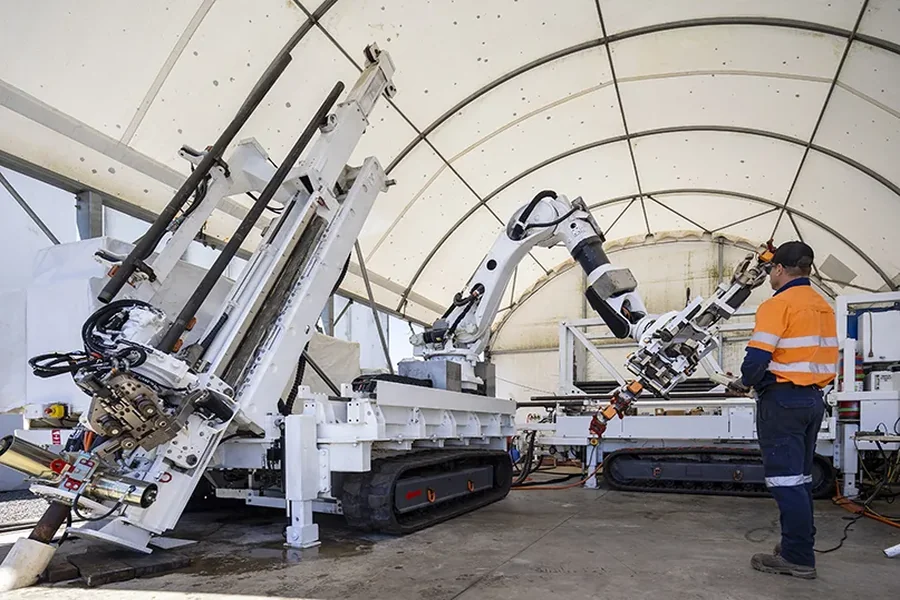
Automation has taken computerised drilling a step further. Automated drill rigs can drill single holes, complete rounds or entire production patterns with minimal operator involvement. Operators supervise the process, intervening only when necessary. In the most advanced operations, several rigs can be monitored and controlled from a single remote control room, often located on the surface.
Automation allows drilling to continue during shift changes, breaks and blasting clearance periods, increasing productive hours. It also removes operators from hazardous areas, reducing exposure to rockfalls, dust, noise and vibration.
Measure-while-drilling technology
Measure-while-drilling systems record detailed information about every hole as it is drilled. Parameters such as penetration rate, feed pressure, rotation pressure and flushing pressure provide insight into the properties of the rock. By analysing this data, engineers can identify changes in rock hardness, fractures, voids and weak zones.
This information has many uses. It can inform blast designs, guide ground support decisions and improve understanding of the orebody. In tunnelling, it can highlight potential hazards ahead of the face, allowing teams to take precautions before problems arise.
Advances in rock drills and tools
The rock drill itself has seen continuous improvement. Modern hydraulic rock drills deliver higher impact energy and faster penetration rates while using energy more efficiently. Improved designs reduce vibration and noise, extending component life and improving working conditions.
Drilling tools have also advanced. Better materials and designs for drill bits, rods and shanks increase durability and penetration rates, while reducing the frequency of tool changes. Tools designed to minimise hole deviation help improve drilling accuracy, particularly in long production holes.
Battery-electric drill rigs
Electrification is one of the most important trends in mining, and drilling is no exception. Many underground drill rigs already use electric power from the mine’s network while drilling, but they traditionally relied on diesel engines to move between work areas. Battery-electric drill rigs eliminate this need, allowing machines to travel and operate without producing exhaust emissions underground.
This reduces exposure to diesel particulate matter, lowers heat output and can help reduce ventilation requirements, cutting energy use and costs. Some battery-electric rigs can also recharge their batteries while drilling, connected to the mine’s electrical supply.
Digital connectivity and fleet management
Modern drill rigs are increasingly connected to digital systems that collect and analyse data in real time. Telematics platforms monitor machine performance, utilisation, drilling progress and maintenance needs. Mine planners can track drilling against the plan, identify bottlenecks and coordinate drilling with other activities in the mining cycle.
Connectivity also supports remote diagnostics, allowing service teams to identify and resolve issues without visiting the machine. Predictive maintenance tools use data to anticipate component failures, enabling repairs to be planned before a breakdown occurs.
Improved operator environments
Innovation is not only about technology at the drill bit. Modern drill rigs feature safer, more comfortable cabins with better visibility, climate control, reduced noise and ergonomic controls. Intuitive touchscreen interfaces make it easier to operate complex systems. Simulators allow operators to train in a safe environment before working on real machines, building skills without risking equipment or production.
Integrating drilling with the wider operation
The greatest benefits often come when drilling technology is integrated with the wider mining process. Drill data can feed into blast design software, mine planning systems and geological models. Automated drilling can be coordinated with automated loading and hauling, creating more seamless and efficient operations. As digital mining platforms mature, drilling is becoming an increasingly connected part of the overall mine system.
Investing in modern mining drilling equipment allows operations to take advantage of these innovations, provided it is supported by the training, service and digital infrastructure needed to make the most of them.
Looking to the future
Drilling technology continues to evolve. Advances in artificial intelligence and machine learning may allow rigs to optimise drilling parameters automatically based on real-time conditions. Improvements in battery technology will extend the capabilities of electric machines. Greater automation and connectivity will further reduce the need for people to work in hazardous environments.
These innovations are helping mines become safer, more productive and more sustainable. As the industry faces deeper deposits, tighter margins and higher expectations, drilling technology will continue to play a vital role in shaping the future of mining.